Welcome to Khalid Nehar Al Shamry Trading Est. |
[email protected]






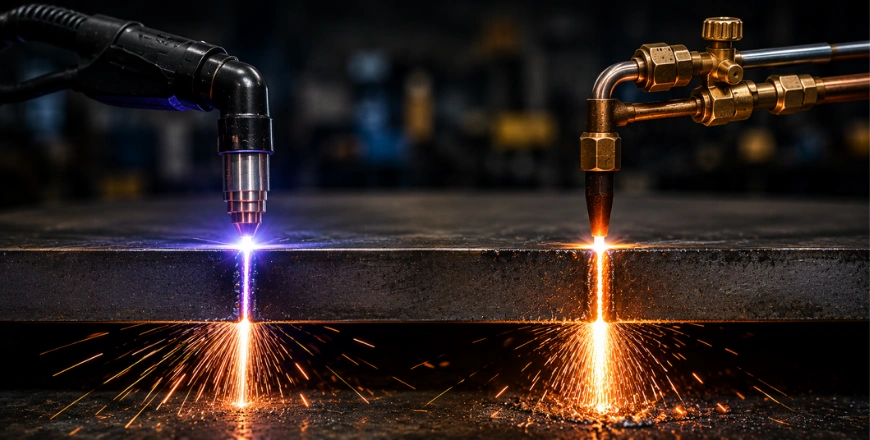
When it comes to metal fabrication, choosing the right cutting method can make a big difference in the quality, speed, and cost of your work. Whether you're a beginner, a professional fabricator, or an industrial manufacturer, understanding the differences between Air Plasma Cutting vs Gas Cutting will help you make the right decision for your projects. Both cutting methods are widely used across industries such as construction, automotive, shipbuilding, and manufacturing. However, they work in different ways and are designed for different types of metals and applications. Air plasma cutting is known for its high speed, clean cuts, and ability to cut different conductive metals. Gas cutting, also called oxy-fuel cutting, is a trusted method for cutting thick carbon steel at a lower equipment cost.
In this complete comparison guide, you'll learn:
What air plasma cutting is and how it works
What gas cutting is and its working process
The advantages and disadvantages of each method
Which metals each process can cut
Cost and performance comparison
Real-world industrial applications
Expert tips for choosing the best cutting method
Answers to frequently asked questions
By the end of this guide, you'll have a clear understanding of which cutting process is the best fit for your business or workshop.
Air plasma cutting is a modern metal cutting process that uses an electrical arc and compressed air to create a stream of superheated plasma. This plasma reaches extremely high temperatures and melts the metal while blowing the molten material away, creating a clean and precise cut. Unlike traditional gas cutting, air plasma cutting does not rely on oxygen and fuel gas. Instead, it uses electricity and compressed air, making it a faster and more versatile solution for many fabrication tasks. Because of its speed and accuracy, air plasma cutting has become one of the most popular metal cutting methods in industries that require high productivity and excellent cut quality.
The air plasma cutting process is simple but highly effective. Here's how it works:
Compressed air is supplied through the plasma torch.
An electrical current creates an arc inside the torch.
The arc converts the compressed air into plasma, an extremely hot, electrically conductive gas.
The plasma melts the metal surface almost instantly.
The high-pressure air blows the molten metal away, leaving a smooth and accurate cut.
Since the heat is concentrated in a very small area, plasma cutting creates a narrow cut with minimal heat distortion. This makes it ideal for precision work and detailed fabrication.
Air plasma cutting offers several benefits that make it a preferred choice for modern workshops and industrial manufacturers.
1. Fast Cutting Speed
One of the biggest advantages of air plasma cutting is its speed. It cuts much faster than gas cutting, especially when working with thin and medium-thickness metals.
Higher cutting speed means:
Increased productivity
Reduced project completion time
Lower labour costs
Better production efficiency
For businesses handling large volumes of metal fabrication, this speed can significantly improve daily output.
2. Clean and Precise Cuts
Air plasma cutters produce smooth edges with very little slag. In many cases, the cut requires little or no grinding before welding or painting. This helps save time and reduces finishing costs.
3. Cuts a Wide Variety of Metals
Unlike gas cutting, plasma cutting is suitable for many electrically conductive metals, including:
Mild steel
Stainless steel
Aluminum
Copper
Brass
Cast iron
Galvanized steel
This versatility makes one plasma cutter suitable for multiple fabrication jobs.
4. Smaller Heat-Affected Zone
Because plasma cutting focuses heat in a small area, there is less thermal distortion. This helps maintain the strength and shape of the material, making it especially useful for precision fabrication.
5. Easy to Automate
Air plasma cutting works exceptionally well with CNC cutting machines. Many manufacturing companies use CNC plasma systems for accurate, repeatable, and high-speed production.
This makes plasma cutting an excellent choice for mass production and industrial fabrication.
Although air plasma cutting has many advantages, it also has a few limitations.
1. Higher Initial Investment
Plasma cutting machines generally cost more than traditional gas cutting equipment.
2. Requires Electricity and Compressed Air
Unlike gas cutting systems, plasma cutters need a reliable electrical power supply and an air compressor to operate efficiently.
3. Consumables Need Replacement
Electrodes, nozzles, and other consumable parts wear out over time and must be replaced regularly to maintain cutting quality.
4. Less Suitable for Extremely Thick Steel
While plasma cutters can handle thick metal, gas cutting often remains the better option for cutting very thick carbon steel plates used in heavy construction and shipbuilding.
Because of its speed, precision, and versatility, air plasma cutting is widely used in many industries.
Common applications include:
Sheet metal fabrication
Automotive repair and manufacturing
Stainless steel fabrication
Aluminum fabrication
HVAC duct manufacturing
Industrial equipment manufacturing
CNC metal cutting
Metal furniture production
Agricultural machinery
Decorative metal art
Whether you're producing custom metal parts or large industrial components, air plasma cutting offers the flexibility and performance needed for modern fabrication.
1. Which is better: Air Plasma Cutting or Gas Cutting?
Air plasma cutting is better for speed, precision, and cutting different conductive metals. Gas cutting is better for thick carbon steel and heavy industrial work.
2. Can plasma cutting cut stainless steel?
Yes. Air plasma cutting can easily cut stainless steel while maintaining clean edges and high accuracy.
3. Is gas cutting cheaper than plasma cutting?
Gas cutting equipment costs less initially, but plasma cutting often reduces labour costs and improves productivity over time.
4. Which cutting process is faster?
Air plasma cutting is much faster than gas cutting, especially on thin and medium-thickness metals.
5. Which industries use plasma cutting?
Automotive, construction, metal fabrication, HVAC manufacturing, shipbuilding, and CNC fabrication industries all use plasma cutting.
When comparing Air Plasma Cutting vs Gas Cutting, there is no single solution that fits every application. Both cutting methods offer unique advantages, and the right choice depends on your material type, cutting thickness, budget, and production requirements. If your work requires fast cutting, high precision, and the ability to cut multiple conductive metals, air plasma cutting is the better investment. It delivers cleaner cuts, reduces finishing time, and improves overall productivity, making it ideal for fabrication workshops, automotive industries, and CNC cutting applications. On the other hand, if you regularly work with thick carbon steel and need a cost-effective solution for heavy industrial projects, gas cutting remains a reliable and practical option. Before investing in any cutting equipment, consider your daily workload, material types, and long-term operating costs. Choosing the right metal cutting method will help improve efficiency, reduce waste, and deliver high-quality results on every project. Looking for high-quality plasma cutting machines, gas cutting equipment, welding accessories, or industrial safety products? Contact Kasweld Saudi Arabia today for expert guidance and reliable products that meet your industrial needs.