Welcome to Khalid Nehar Al Shamry Trading Est. |
[email protected]






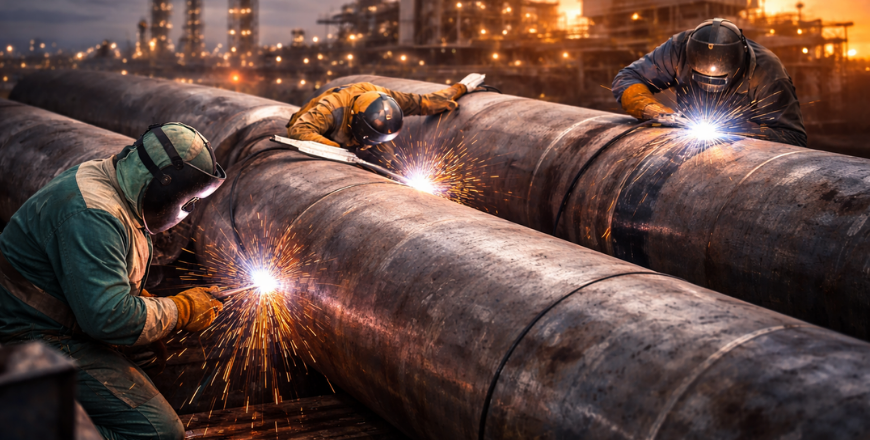
Welding is one of the most important parts of oil and gas projects. It is used in pipelines, refineries, offshore platforms, and storage tanks. These systems carry oil and gas under high pressure and temperature. Because of this, welding must be strong, safe, and reliable. A small mistake in welding can lead to leaks, equipment failure, or serious accidents. In this guide, you will learn welding requirements for oil and gas projects, including standards, procedures, materials, and safety.
In the oil and gas industry, systems work in extreme conditions. They handle flammable materials and operate under pressure.
High-quality welding helps to:
Prevent leaks and failures
Improve safety in operations
Increase equipment life
Reduce maintenance cost
This is why companies follow strict pipeline welding requirements and industry standards.
Different welding processes are used based on project needs:
1. TIG Welding
Used for high-quality and precise welding
Common in pipelines, stainless steel, and critical joints
Produces clean and strong welds
Used for fast welding work
Good for fabrication and large projects
Easy to use and saves time
Most common method in oil & gas
Used for pipeline welding and repair work
Works well in outdoor and harsh environments
Used for repair and maintenance work
Not commonly used for heavy industrial welding
More suitable for light-duty applications
Welding quality depends on the materials used.
Important consumables include:
Electrodes
Filler metals
Shielding gases
These must match the base metal to avoid defects.
Using high-quality materials helps:
Create strong welds
Reduce cracks and failures
Improve long-term durability
A Welding Procedure Specification (WPS) is a document that explains how welding should be done.
It includes:
Welding process
Material type
Temperature control
Welding position
WPS is tested and approved before use. It ensures consistency and quality in every weld.
Oil and gas welding often happens in harsh environments.
Common challenges:
Wind affecting the welding arc
Moisture causing defects
Extreme heat or cold
Special precautions are taken to control these conditions and maintain quality.
Some common issues include:
Welding thick materials
Working in difficult positions
Harsh site conditions
Tight project deadlines
Proper planning and skilled workers help overcome these challenges.
Quality control ensures every weld meets standards.
Benefits:
Reduces defects
Improves safety
Saves cost
Increases project life
Companies invest in quality checks to avoid future failures.
Following proper welding requirements helps:
Improve project performance
Build client trust
Reduce repair costs
Ensure long-term safety
1. What are the welding requirements for oil and gas projects?
They include proper materials, certified welders, approved procedures, and strict inspection.
2. Is WPS in welding?
WPS is a document that defines how welding should be done step by step.
3. Why is welding inspection important?
It helps detect defects and ensures safety before operation.
Welding is the backbone of oil and gas projects. It must be done with proper planning, skilled workers, and strict standards. By following the right oil and gas welding requirements, companies can avoid failures, improve safety, and build reliable systems.
Need Welding Products for Oil & Gas Projects?
We supply high-quality welding equipment, safety products, and accessories for industrial projects.
? Contact us today for reliable supply and best prices.