Welcome to Khalid Nehar Al Shamry Trading Est. |
[email protected]






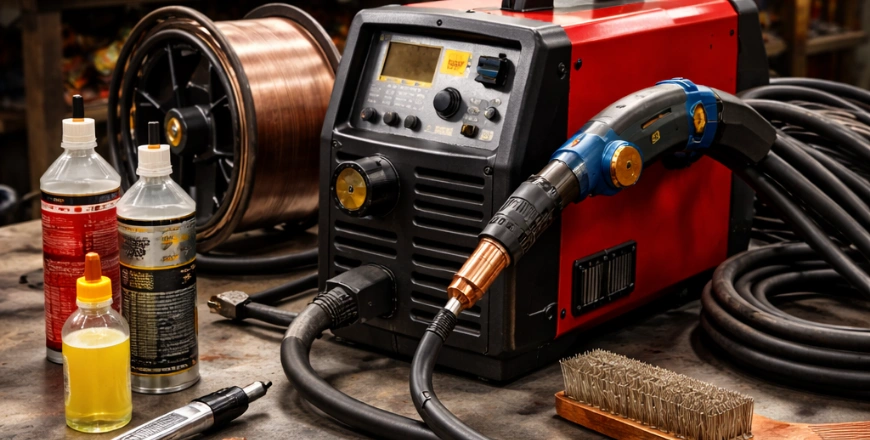
Welding equipment is an essential part of many industries such as construction, fabrication, manufacturing and metal repair. Reliable welding tools help workers produce strong and precise welds. However, to keep welding equipment working efficiently, proper maintenance is very important.
Regular maintenance not only improves the performance of welding machines but also extends their lifespan. When equipment is well maintained, it reduces downtime, prevents unexpected breakdowns and supports safe working conditions. By following simple maintenance practices, businesses can protect their investment and maintain smooth industrial operations.
One of the simplest and most effective ways to maintain welding equipment is regular cleaning. Welding environments often produce dust, metal particles and fumes that can accumulate on machines and accessories.
If dirt and debris build up inside the equipment, it may affect the performance of the welding machine. Cooling systems can become blocked and electrical components may overheat.
Workers should regularly wipe down welding machines and clean vents to remove dust. Using compressed air to remove particles from hard-to-reach areas can also help keep equipment in good condition.
Clean equipment runs more efficiently and reduces the risk of overheating.
Welding cables and electrical connections play a critical role in delivering power to the welding arc. Damaged cables or loose connections can lead to unstable welding performance.
It is important to check welding cables regularly for cuts, cracks, or worn insulation. If a cable shows signs of damage, it should be repaired or replaced immediately.
Connections between the machine, electrode holder and grounding clamp should also be inspected. Tight and secure connections help maintain stable current flow and improve welding quality.
Regular inspection of cables helps prevent electrical problems and ensures smooth operation.
Many welding machines use cooling systems to control heat during operation. If the cooling system is not functioning properly, the equipment may overheat and stop working.
Air vents and cooling fans should always remain clean and free from obstructions. Workers should check that fans are running properly and that airflow is not blocked.
For water-cooled welding equipment, it is important to monitor the coolant level and ensure the cooling system is working correctly.
Maintaining proper cooling helps protect internal components and extends the life of the welding machine.
Welding consumables such as electrodes, wires and tips also require proper care. Poor storage or handling can reduce their effectiveness and affect welding results.
Electrodes should be stored in dry conditions to prevent moisture absorption. Moisture can weaken weld quality and create defects.
Contact tips and nozzles should be cleaned regularly to remove spatter and debris. Worn tips should be replaced to maintain stable arc performance.
Proper management of consumables helps maintain consistent welding quality.
Routine inspection is an important part of welding equipment maintenance. By checking machines regularly, small problems can be identified before they become serious issues.
Workers should inspect the following parts:
If any component appears damaged or worn out, it should be repaired or replaced immediately.
Regular inspection helps prevent equipment failure and keeps operations running smoothly.
Proper storage is another important factor in maintaining welding equipment. Machines and accessories should be stored in a clean, dry environment when not in use.
Exposure to moisture, extreme temperatures, or dust can damage electrical components and reduce equipment lifespan.
Protective covers can help prevent dust buildup and equipment should be kept away from water or corrosive materials.
Good storage practices help maintain equipment condition and reduce maintenance needs.
Even the best welding equipment can wear out quickly if it is used incorrectly. Proper training is essential to ensure workers understand how to operate welding machines safely and efficiently.
Operators should follow recommended settings, avoid overloading the machine and use the correct accessories for each task.
Training also helps workers recognize early warning signs of equipment problems. Reporting issues quickly allows maintenance teams to fix them before they cause larger failures.
Well-trained operators play a key role in maintaining welding equipment performance.
Preventive maintenance helps avoid unexpected equipment failures. Instead of waiting for a problem to occur, companies should schedule regular service checks for welding machines.
Maintenance teams can inspect internal components, test electrical systems and replace worn parts during these checks.
Preventive maintenance keeps equipment running smoothly and reduces costly downtime in industrial operations.
Maintaining welding equipment is essential for achieving reliable performance and long-term durability. Simple steps such as cleaning machines, inspecting cables, maintaining cooling systems and storing equipment properly can make a big difference.
Regular maintenance not only extends the life of welding tools but also improves productivity and workplace safety. Companies that follow proper maintenance practices can reduce repair costs, avoid delays and maintain high-quality welding results.
With the right care and attention, welding equipment can continue to perform efficiently for many years, supporting smooth and successful industrial operations.