Welcome to Khalid Nehar Al Shamry Trading Est. |
[email protected]






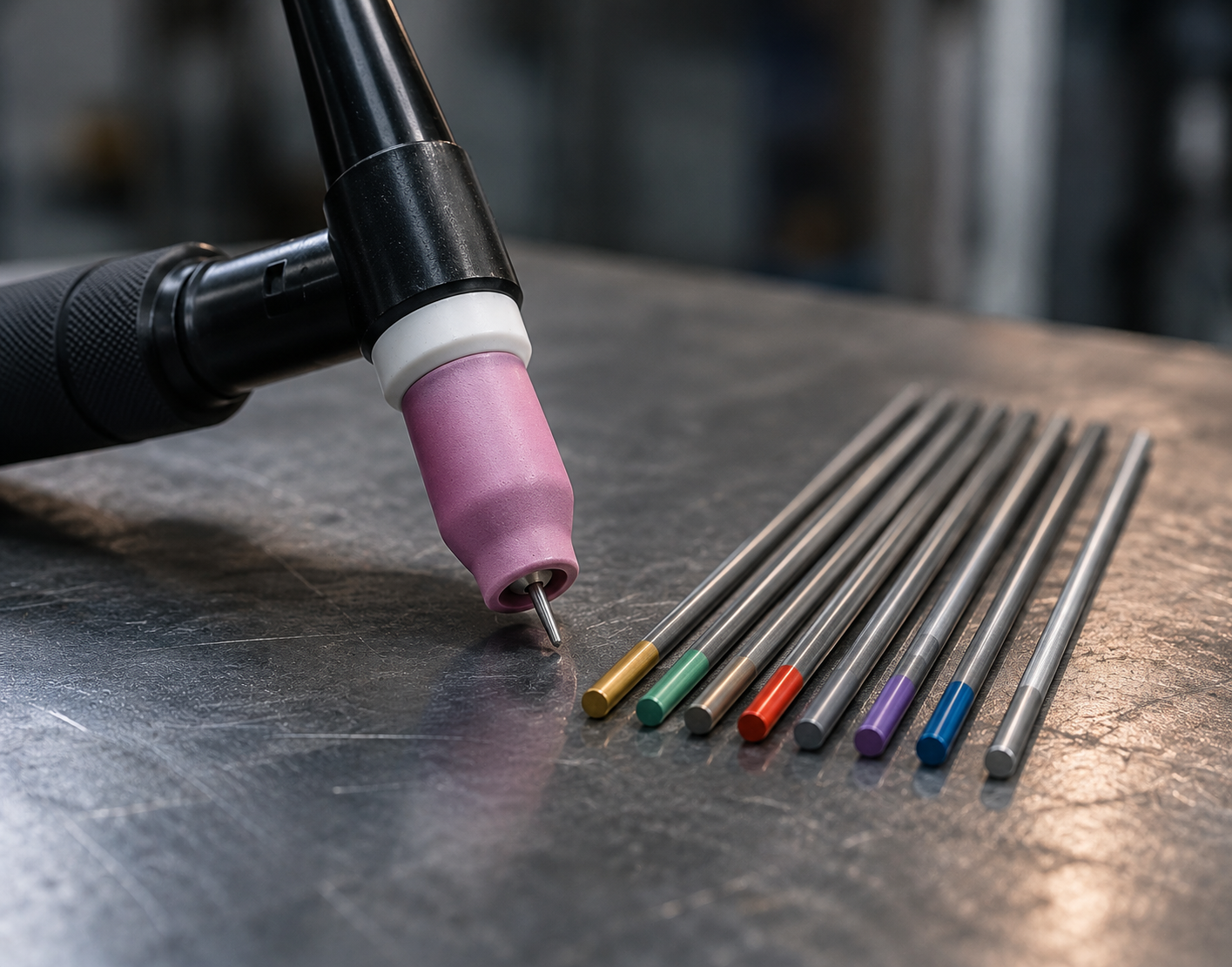
Choosing the right tungsten electrode is important for achieving stable arcs, precise welds, and consistent TIG welding performance. TIG welding is widely used for applications where accuracy, clean welds, and control are important, including fabrication, construction, manufacturing, maintenance, and industrial projects. However, tungsten electrodes are available in different types, sizes, and compositions. Choosing the wrong electrode can lead to poor arc stability, excessive wear, contamination, or inconsistent welding results. So, how do you choose the right tungsten electrode for your TIG welding application? This guide explains the main types of tungsten electrodes, how to select the correct size, what factors to consider, and how to choose an electrode based on the material and welding conditions.
A tungsten electrode is a non-consumable electrode used in TIG (Tungsten Inert Gas) welding, also known as Gas Tungsten Arc Welding (GTAW). The electrode creates and maintains the electrical arc between the welding torch and the workpiece. Unlike consumable welding electrodes, the tungsten electrode is designed to withstand high temperatures without being consumed as the primary filler material.TIG welding may use a separate filler rod when additional material is required.
Because tungsten has a very high melting point, it is suitable for producing a stable arc during TIG welding. Different tungsten electrode compositions are available to meet different welding requirements.
Selecting the appropriate electrode can have a significant effect on TIG welding performance.
The right tungsten electrode can help provide:
Stable arc performance
Reliable arc starting
Better control during welding
Consistent weld quality
Suitable electrode life
Reduced contamination
Improved precision
Using an unsuitable electrode can create problems such as an unstable arc, excessive electrode wear, poor arc starting, or contamination of the tungsten.
For this reason, electrode selection should be based on the welding material, current type, amperage, electrode diameter, and application.
Different tungsten electrode types are designed for different welding conditions. Common types include pure, thoriated, ceriated, lanthanated, and zirconiated tungsten electrodes.
1. Pure Tungsten Electrode
Pure tungsten electrodes contain tungsten without intentional oxide additions.
They have traditionally been associated with AC TIG welding, particularly for applications involving aluminum and magnesium.
General characteristics include:
Commonly associated with AC TIG welding
Suitable for certain aluminum and magnesium applications
Traditionally used with a balled electrode tip under appropriate AC conditions
Generally less versatile than many modern doped electrodes
2. Thoriated Tungsten Electrode
Because thorium is radioactive, appropriate workplace safety, handling, grinding, and disposal procedures should be followed.
3. Ceriated Tungsten Electrode
4. Lanthanated Tungsten Electrode
They are popular because of their versatility, arc-starting performance, and suitability for a wide range of welding applications.
| Tungsten Electrode Type | Common Application | General Characteristics |
|---|---|---|
| Pure Tungsten | Certain AC applications | Traditional AC option |
| Thoriated | DC TIG welding | Good arc starting and durability |
| Ceriated | Lower-current applications | Good arc starting |
| Lanthanated | AC/DC applications | Versatile and reliable |
| Zirconiated | AC applications | Good tip stability |
The best electrode depends on the welding machine, material, current, amperage, and specific application.
There is no single best tungsten electrode for every TIG welding application. Consider the following factors before making a selection.
1. Consider the Welding Material
The material you are welding is one of the most important factors.
Different materials are commonly welded using different current types and welding parameters.
For example:
Aluminum: commonly welded using AC TIG.
Stainless steel: commonly welded using DC TIG.
Mild steel: commonly welded using DC TIG.
Nickel alloys: commonly welded using controlled TIG welding conditions.
Copper: may require higher heat input because of its thermal conductivity.
The material thickness and specific alloy should also be considered when selecting the electrode.
2. Check AC or DC Current
Your TIG welding machine's current type plays an important role in electrode selection.
DC TIG is commonly used for materials such as stainless steel, mild steel, and nickel alloys.
AC TIG is commonly used for aluminum and magnesium.
Some modern tungsten electrode types are suitable for both AC and DC applications. However, always check the manufacturer's recommendations before selecting an electrode for a particular current type.
3. Consider Welding Amperage
Welding amperage affects the required tungsten electrode diameter.
Higher-current welding applications generally require an electrode that can withstand the additional electrical and thermal load.
For lower-current applications, a smaller electrode can often provide better arc control.
An electrode that is too small for the application may overheat and wear quickly. An unnecessarily large electrode may make arc control more difficult at low currents.
4. Select the Correct Electrode Diameter
Tungsten electrodes are available in different diameters, including commonly used sizes such as:
1.0 mm
1.6 mm
2.0 mm
2.4 mm
3.2 mm
4.0 mm
The correct diameter depends on the welding current, electrode composition, material, application, and welding conditions.
| Electrode Diameter | General Application |
|---|---|
| 1.0 mm | Lower-current precision work |
| 1.6 mm | Low to moderate current |
| 2.0 mm | Moderate-current applications |
| 2.4 mm | Common general-purpose applications |
| 3.2 mm | Higher-current applications |
| 4.0 mm | Higher-current/heavy-duty applications |
These are general guidelines rather than universal current ratings. Actual operating ranges vary depending on electrode type, polarity, shielding gas, welding conditions, and manufacturer specifications.
Tungsten Electrode for Aluminum
Aluminum is commonly welded using AC TIG.
When selecting a tungsten electrode for aluminum, consider:
AC welding requirements
Material thickness
Welding current
Electrode diameter
AC balance and frequency settings
Required tip preparation
An electrode suitable for AC TIG should be selected according to the specific welding application and manufacturer's recommendations.
Stainless steel is commonly welded using DC TIG.
When choosing an electrode, consider:
Current type
Material thickness
Welding amperage
Electrode diameter
Required arc characteristics
Ceriated, lanthanated, and thoriated electrodes may be considered depending on the application and welding procedure.
Mild steel is generally welded using DC TIG. The appropriate electrode diameter and composition should be selected according to the welding current, material thickness, and application.
For industrial fabrication, following the recommended welding procedure can help ensure consistent results.
Proper tungsten electrode preparation is important for TIG welding performance.
For many DC TIG applications, a pointed electrode tip is commonly used to create a focused arc. The appropriate tip geometry can vary depending on the electrode type, welding current, and application.
General grinding practices include:
Use dedicated tungsten grinding equipment.
Grind the electrode consistently.
Keep grinding marks aligned with the electrode length.
Avoid contaminating the electrode with other metals.
Maintain the appropriate tip shape for the application.
Regrind the electrode if it becomes contaminated or damaged.
Always follow the electrode manufacturer's recommendations for grinding and tip preparation.
Incorrect electrode selection or preparation can cause several TIG welding problems.
| Problem | Possible Cause | Solution |
|---|---|---|
| Unstable arc | Incorrect electrode or settings | Check electrode selection and welding parameters |
| Poor arc starting | Unsuitable electrode/setup | Review electrode type and machine settings |
| Electrode contamination | Tungsten touched the workpiece | Regrind or replace the electrode |
| Excessive wear | Incorrect current or diameter | Check electrode size and welding current |
| Electrode overheating | Excessive current | Check current, diameter, and cooling |
| Inconsistent welds | Poor preparation or settings | Review welding parameters and electrode condition |
For industrial buyers, choosing a tungsten electrode should involve more than comparing prices.
Before purchasing, check the following:
1. Electrode Type
Confirm whether you require pure, thoriated, ceriated, lanthanated, zirconiated, or another specified composition.
2. Diameter and Length
Make sure the electrode dimensions are compatible with your TIG torch and welding requirements.
3. Application
Confirm that the electrode is suitable for your material, current type, and welding procedure.
4. Product Specifications
Always review the manufacturer's technical data for recommended operating conditions.
5. Supplier Reliability
For industrial projects, consistent product availability is important. A reliable supplier should be able to provide the required electrode type and size according to your application.
If you are sourcing tungsten electrodes in Saudi Arabia, consider factors such as product range, availability, delivery capability, specifications, and support for ongoing industrial requirements.
1. What is a tungsten electrode used for?
A tungsten electrode is used in TIG welding to create and maintain the welding arc. It is a non-consumable electrode.
2. Which tungsten electrode is best for TIG welding?
There is no single best option for every application. The correct choice depends on the material, current type, amperage, electrode diameter, and welding requirements.
3. What are the main types of tungsten electrodes?
Common types include pure tungsten, thoriated, ceriated, lanthanated, and zirconiated tungsten electrodes.
4. How do I choose the correct tungsten electrode size?
Choose the electrode diameter according to welding current, material, electrode type, and application. Always check manufacturer recommendations for exact operating ranges.
5. Which tungsten electrode is best for aluminum?
Aluminum is commonly welded using AC TIG. The appropriate AC-compatible electrode should be selected based on the welding machine, current, material thickness, and manufacturer's recommendations.
6. Which tungsten electrode is best for stainless steel?
Stainless steel is commonly welded using DC TIG. Electrode selection depends on the welding procedure, current, amperage, and application.
7. How often should a tungsten electrode be replaced?
Replacement depends on the application and electrode condition. An electrode should be reground or replaced when it becomes contaminated, damaged, excessively worn, or unsuitable for producing the required arc.
8. Can one tungsten electrode be used for AC and DC welding?
Some tungsten electrode types can be used for both AC and DC applications. However, suitability depends on the specific electrode and welding conditions, so manufacturer recommendations should be followed.
Choosing the right tungsten electrode is essential for achieving reliable TIG welding performance. The correct selection depends on several factors, including the material being welded, AC or DC current, welding amperage, electrode diameter, welding application, and equipment compatibility.
Understanding the differences between pure, thoriated, ceriated, lanthanated, and zirconiated tungsten electrodes can help welders and industrial buyers make a more informed decision.
For professional and industrial welding applications, always follow the manufacturer's technical specifications and the applicable welding procedure.
If you are looking for tungsten electrodes in Saudi Arabia, choose a supplier that can provide suitable electrode types and sizes for your specific welding requirements.
Need help choosing the right tungsten electrode? Contact our team to discuss your welding application, required specifications, product availability, and industrial requirements.